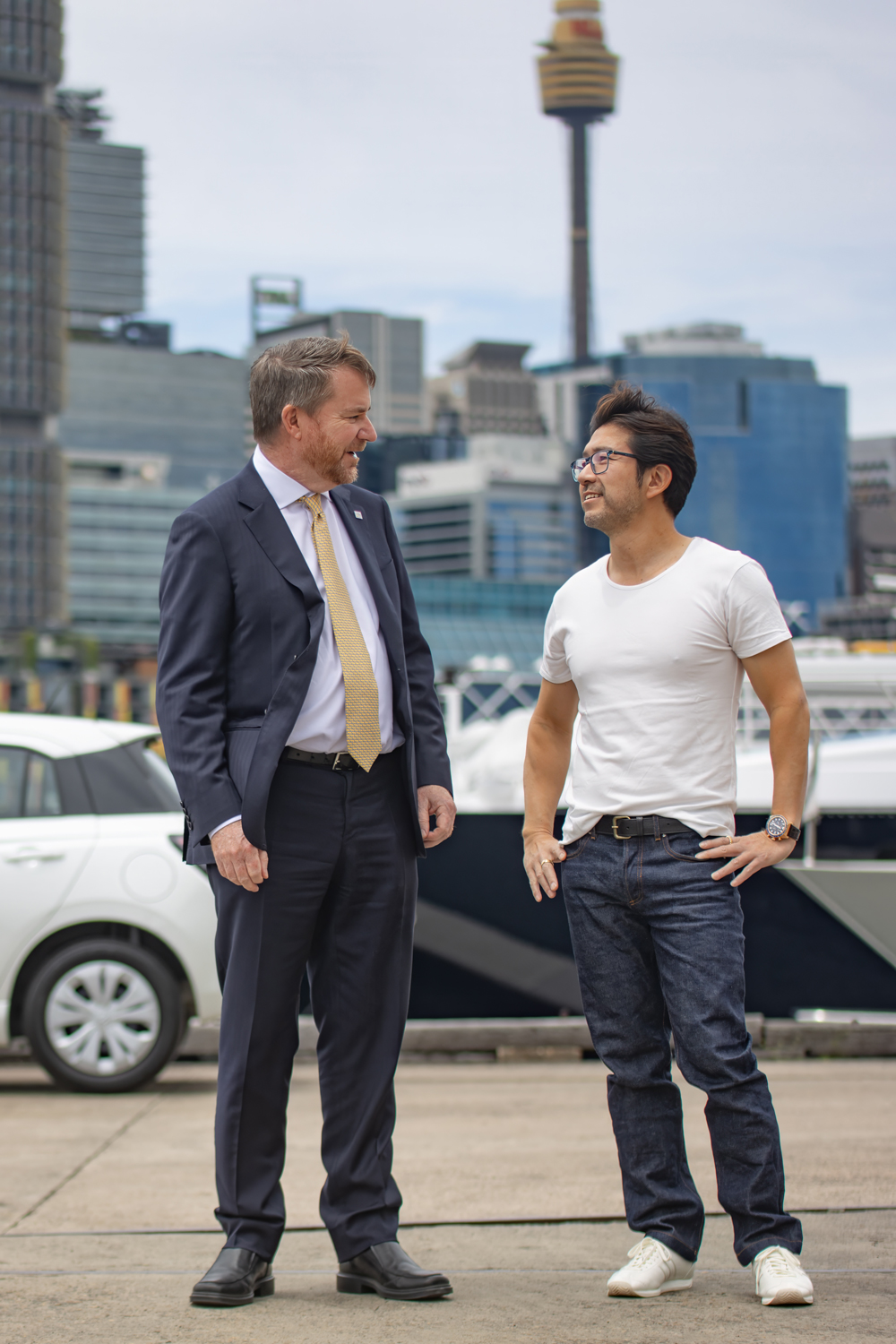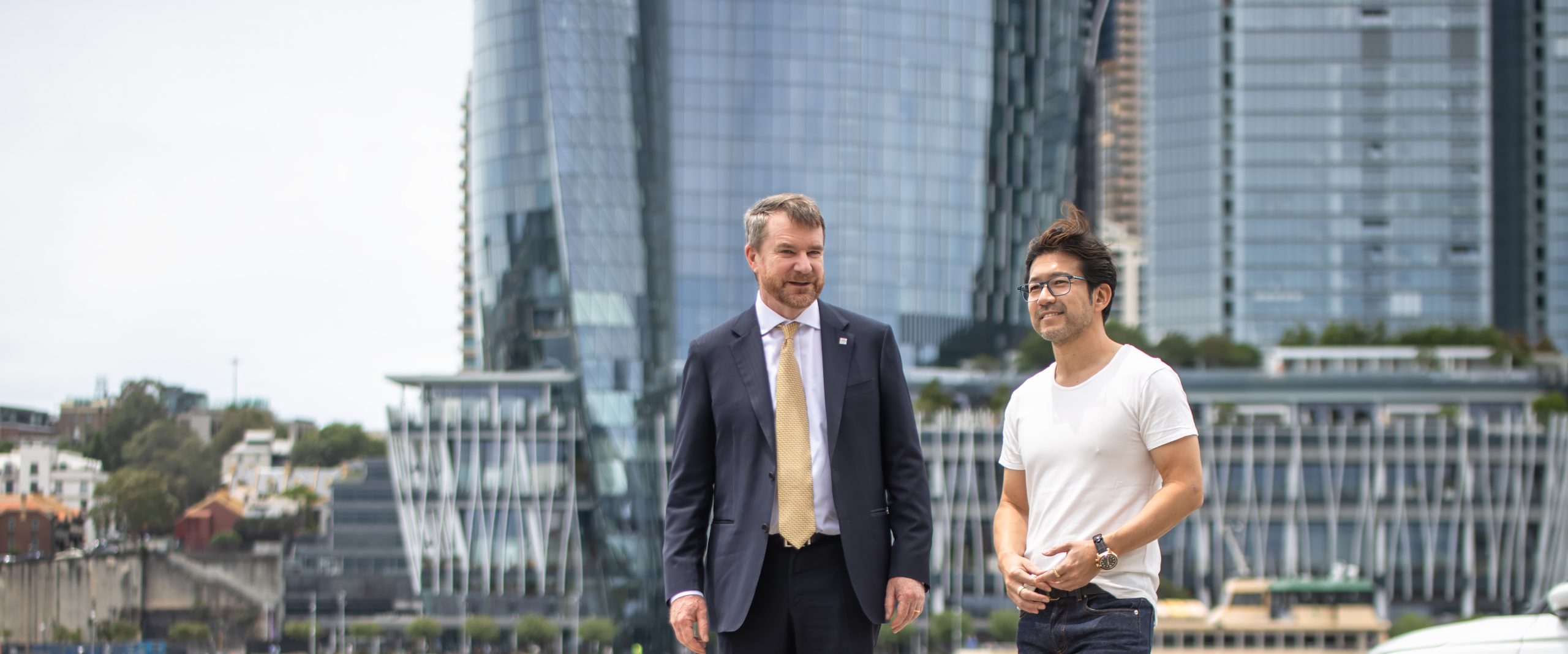
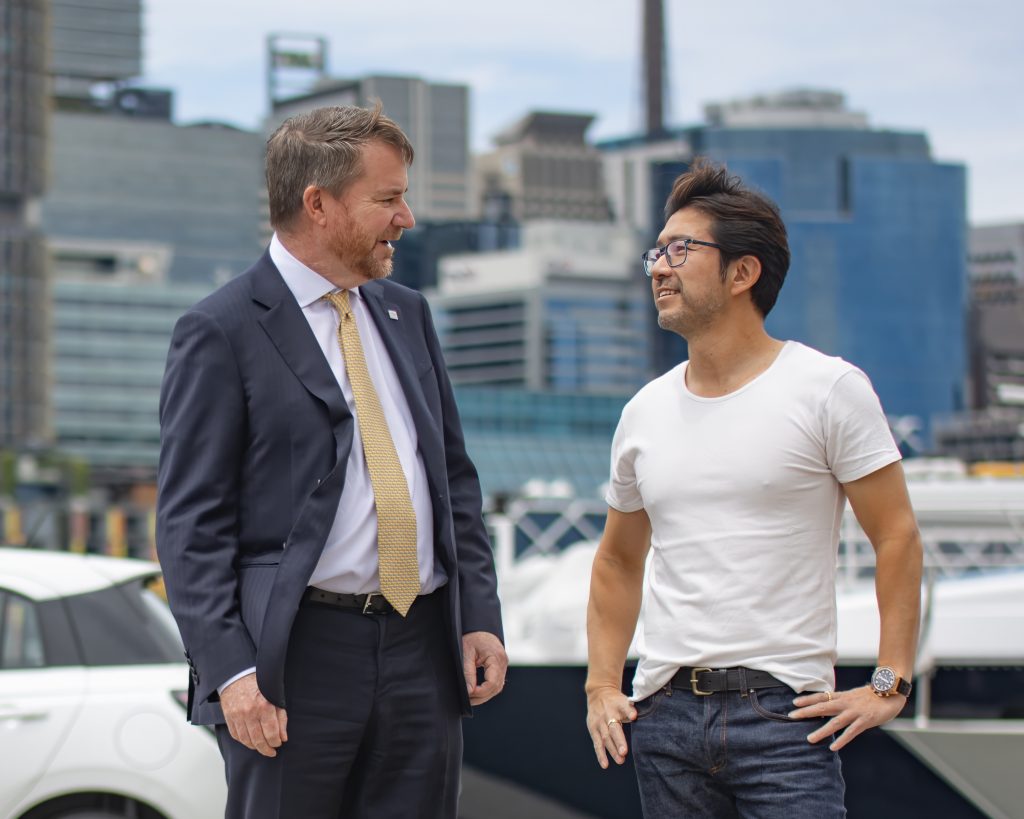
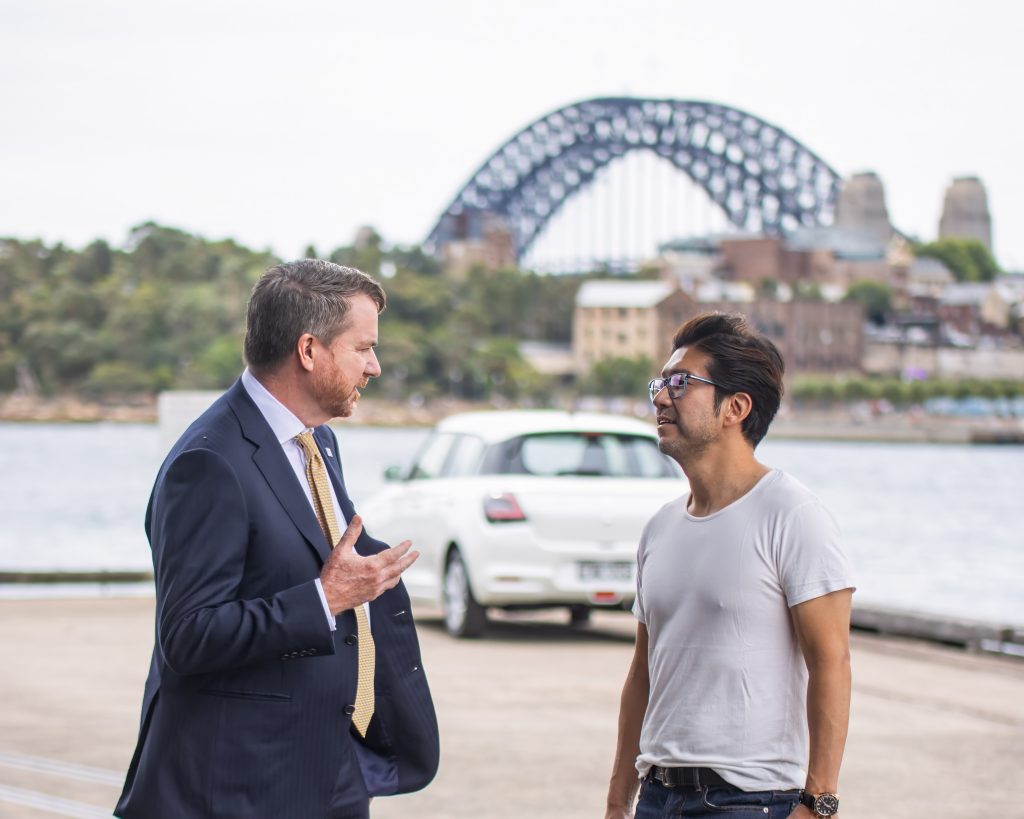
This series features in-depth conversations on business with key figures in Australia–Japan relations, hosted by Yoshinori Sakuno, founder of the Japanese cross-cultural marketing company doq®, who has been active across a wide range of business fields and currently serves as Chairperson of Nichigo Press. In this installment, we welcome Richard Andrews, Chief Executive Officer of the Australia–Japan Business Cooperation Committee (AJBCC), whose experience spans from studying in Japan as an exchange student,to holding a strong track record in authoring reports on Australia–Japan economic relations.
(Photography: Satoko Clarke, Translated from Japanese by Joy Hansen)
PROFILE
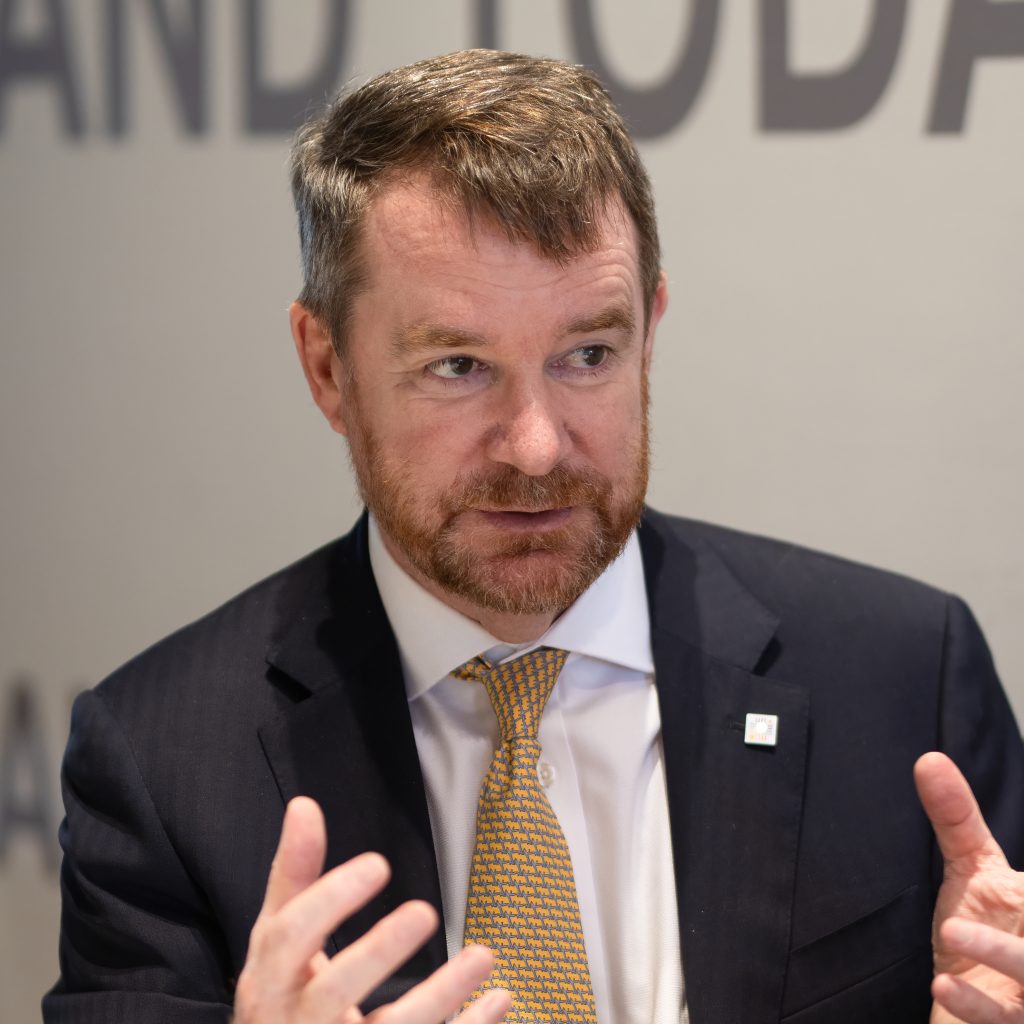
Richard Andrews
The Chief Executive Officer of the Australia–Japan Business Cooperation Committee (AJBCC). A former senior diplomat and public servant, he served as Australia’s Ambassador to Ireland from 2016 to 2020. He was involved in the design and implementation of Australia’s international stakeholder engagement program in preparation for the 2014 G20 Summit. As a member of the senior executive team at the Australian Embassy in Tokyo, he played a key role in Australia’s response to the earthquake, tsunami, and nuclear disaster that struck Japan in 2011.
PROFILE
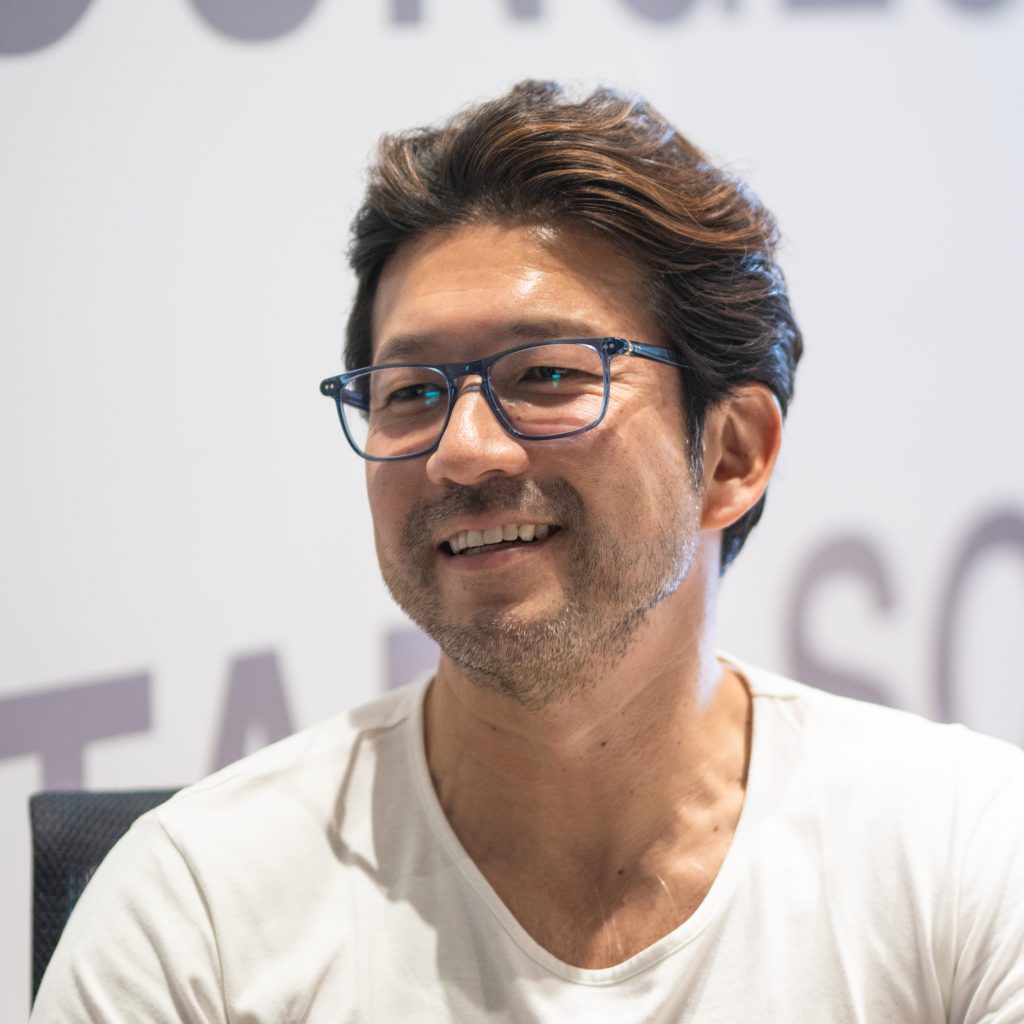
Yoshinori Sakuno
Founder and Group Managing Director of doq®. After gaining experience in the APAC and Western markets at the U.S. advertising agency Leo Burnett, he founded doq® in 2009. He holds an MBA from University of NSWs AGSM and a master’s degree in Digital Media Management from Hyper Island Singapore. He was a finalist for the “Ethnic Business Awards” that honour immigrant entrepreneurs and received the 2021 NSW State Export Award for the Creative Industries sector’s Best Company.
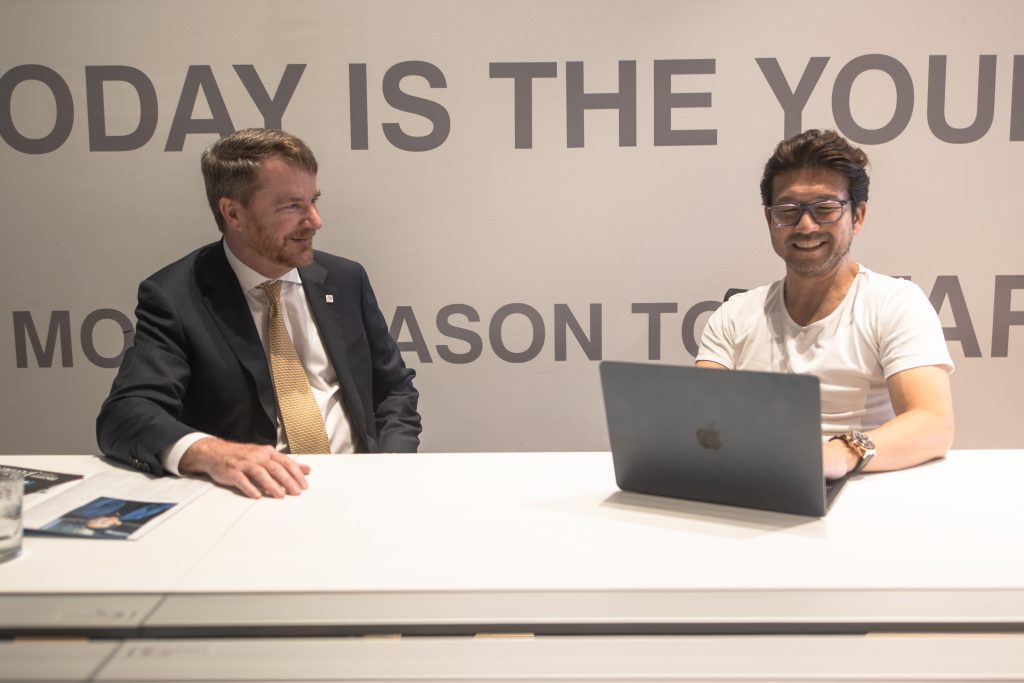
Sakuno: Could you tell us about your career background and how you came to become CEO of the AJBCC?
Andrews: I was born in England but attended secondary school in the state of Victoria. My first encounter with the Japanese language came through an excellent Japanese program at my school. Kanji, hiragana, and katakana looked like a kind of “secret code,” which fascinated me as a young student. After graduating from high school, I felt that despite studying Japanese for six years, I still couldn’t speak it properly. So in 1982, I spent a year in Kobe as an exchange student. That experience became a major turning point. At university, I majored in Japanese at the University of Sydney. When I graduated, I considered either working for a Japanese company or taking on Japan-related work at an Australian firm, but ultimately chose the Department of Foreign Affairs and Trade (DFAT). It offered a broad field where I could apply both language skills and cross-cultural understanding. At DFAT, I was posted to several countries and served in Japan twice. My final posting was as Ambassador to Ireland. Looking back, choosing DFAT was the right decision—it allowed me to work across cultures while maintaining a constant connection with Japan.
Sakuno: And that journey eventually led you to leadership at AJBCC. Were there any defining experiences or mentors that shaped your leadership style?
Andrews: It’s difficult to single out one person, but there is a phrase that deeply influenced me: “The only qualification that truly matters for a leader is whether people will follow them.” I interpret “follow” not as obedience, but as “walking together.” I am mission-driven and goal-oriented, but I know that most meaningful achievements cannot be accomplished alone. That is why I have always focused on how to bring others along and share a sense of purpose. What matters most is understanding where you, personally, can make a difference.
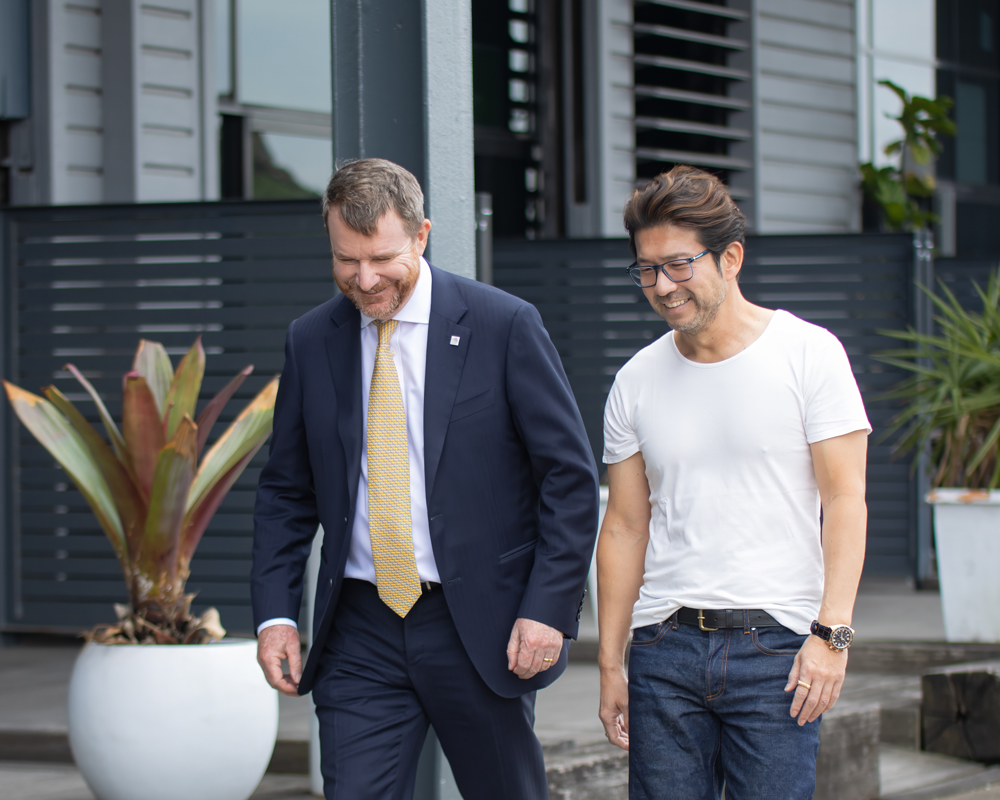
Sakuno: With small teams especially, maximising limited resources to create real impact is crucial. My own approach tends to be more commercially driven, while AJBCC operates as a not-for-profit. What philosophy matters most when leading a team?
Andrews: Team selection. Capability is important, of course, but even more critical is whether people truly believe in the work they are doing. In that respect, I am very fortunate with my team. In small organisations, the workload almost always exceeds what is reflected in salaries, so individual passion for contributing to Australia–Japan relations is essential. It is also important that people feel our work resonates widely—that others say, “This is a worthwhile initiative; I want to be involved.” When that happens, momentum builds. Fortunately, interest in Australia–Japan relations is higher than ever, driven by post-COVID tourism growth, strong consumer interest in Japan, and structural changes in both economies.
Sakuno: From a marketer’s perspective, I believe consumers play a vital role in shaping bilateral relations—tourism being a clear example. The number of Australians visiting Japan has surged, and many return repeatedly. In 2025, more than one million Australian visitors to Japan are expected. What we are seeing is that Australians increasingly want to bring the experiences and value they discover in Japan into their everyday lives back home. This is having a significant impact on industries such as food and dining. As demand grows for authentic Japanese products and experiences in Australia, higher standards of “real Japan” are increasingly expected across sectors.
A New Era of Cooperation Driven by Decarbonisation and Energy
Sakuno: Which growth areas in Australia–Japan relations is AJBCC focusing on?
Andrews: There are three or four key areas. Resources and energy—one of AJBCC’s founding pillars—are now transitioning into a new era driven by decarbonisation. Japan is Australia’s second-largest export destination, with around 70% of exports consisting of coal and LNG. These resources underpin Japan’s energy supply but are also highly carbon-intensive. If decarbonisation causes this trade to shrink, both countries will face major challenges. That is why we need to work together to ensure that by 2050, both nations can achieve carbon neutrality while maintaining energy security and remaining vital partners to one another. Over recent years, AJBCC has actively sought to create forums where partners can discuss how to approach decarbonisation together. This is an essential issue for both countries.
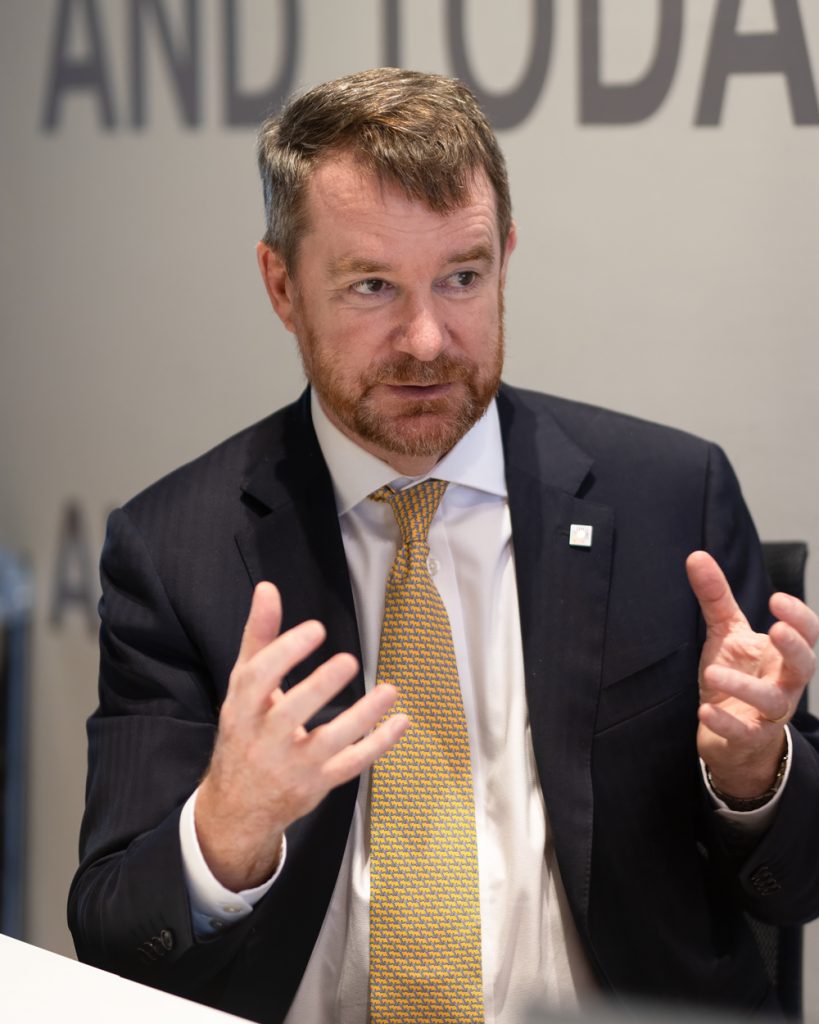
Sakuno: Tourism is also highly sensitive to exchange rates, isn’t it?
Andrews: Very much so. When I studied in Japan in 1982, one Australian dollar was worth 250 yen. By the late 1990s, it had fallen into the 50 yen range. Today, the Australian dollar’s position means Japan is no longer perceived as an expensive destination for Australians. Tourism reflects economic conditions, but increased travel also deepens mutual understanding and friendship, strengthening the bilateral relationship.
Sakuno: If exchange rates move in the opposite direction, tourism patterns can change significantly. Yet looking more broadly, Japanese people still travel to places like Hawaii and Europe even with a weak yen. Some destinations continue to be chosen regardless of currency conditions. That’s why I believe Australia’s tourism industry needs to enhance its appeal and clearly communicate why it should be chosen.
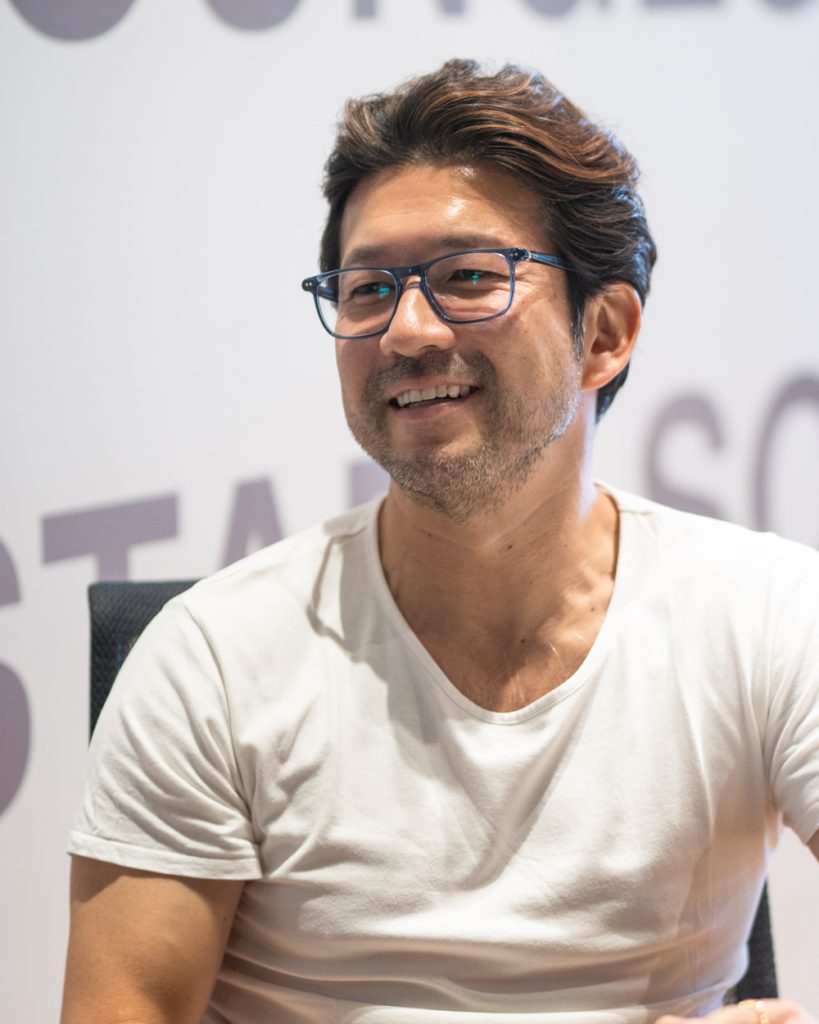
Andrews: I agree. Around the time I took on this role, several major factors began reshaping Australia–Japan relations. One was COVID-19, which had a significant impact on our organisation as well. Another was Australia and Japan reassessing how they viewed China as a commercial partner following China’s economic measures against Australia. A third critical factor was both countries committing to carbon neutrality by 2050. Together, these developments prompted a comprehensive re-evaluation of the bilateral relationship. Through that process, both sides rediscovered many positive possibilities. In particular, discussions around energy expanded into technology cooperation, leading Japanese stakeholders to recognize the strength of Australia’s research capabilities and the many scientific innovations originating here. At the same time, Australians came to see partnerships with Japanese companies as highly effective pathways for deploying advanced technologies. Strong Japanese government support for innovation and startups has also accelerated new forms of collaboration. These emerging combinations are creating a very exciting landscape.
Sakuno: Which technologies do you see as especially promising going forward?
Andrews: Two areas that are not yet widely known: quantum computing and space. Australia’s world-leading quantum technologies, emerging from universities and startups, are attracting global attention. In space, Japan’s advanced technological capabilities pair extremely well with Australia’s vast geography. Australia offers strong potential as a launch base, opening up significant commercial opportunities for cooperation.
Deepening Defence and Human Capital Cooperation
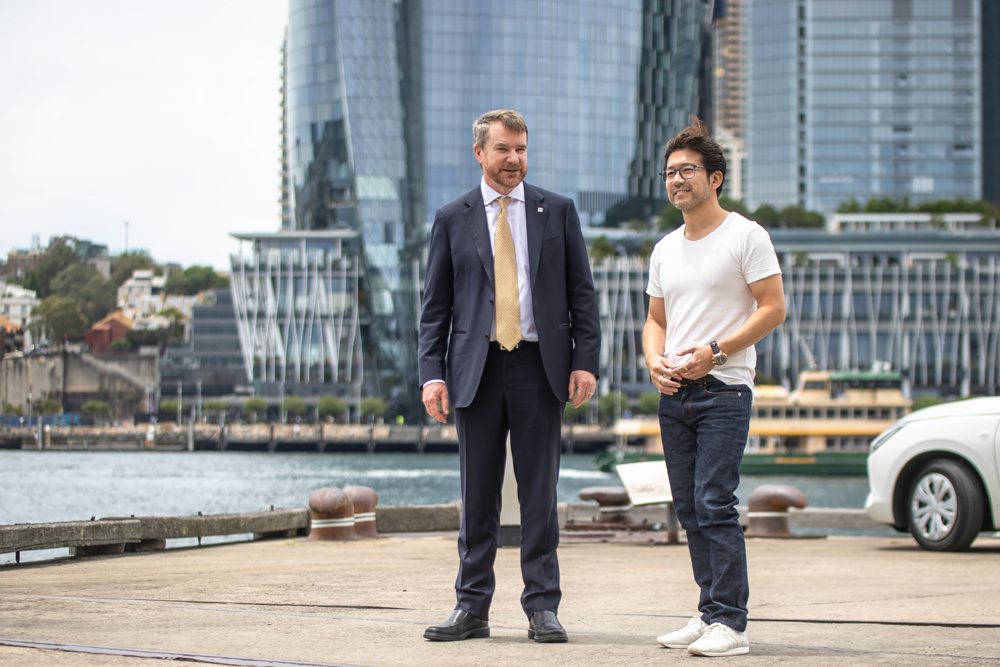
Sakuno: Could we turn to defence cooperation?
Andrews: As you know, the Australian government has decided to adopt Mitsubishi Heavy Industries’ Mogami-class frigate as the foundation for its next-generation frigate capability. Contract negotiations are ongoing, but this decision represents a major turning point. Defence procurement is often subject to intense scrutiny and criticism, yet this decision has been received more positively than anything I have seen in my career—symbolising the strength of Australia–Japan relations. I have been studying Japanese for nearly 50 years, and the transformation in the relationship during that time has been dramatic. What was once a purely transactional, trade-based relationship has matured into cooperation at the national security and defence level—an area that requires deep trust. At AJBCC, we have established advisory committees covering defence, security, and space, which are now among the fastest-growing areas of cooperation. Beyond defence, opportunities are expanding rapidly in cyber, AI, quantum, and space—fields directly linked to national security.
Sakuno: Eighty years ago, Australia and Japan were at war. From there, business and people-to-people exchange began, and today the two countries are strong partners in national defence.
Andrews: Indeed—“close friends” is an accurate description. Public opinion surveys by the Lowy Institute consistently rank Japan among the most trusted countries. We are truly in a golden era, and it is our responsibility to sustain it.
Sakuno: What do you think is essential to maintaining this relationship over the long term?
Andrews: The key issue is how to secure and sustain people with the right skills and interest. Many people say they once studied Japanese or lived in Japan but are no longer engaged. The challenge is how to reconnect with that latent community and help them maintain and strengthen their skills. What has changed fundamentally is that the relationship has become people-centred. We cannot simply continue doing what we have done for decades—we must create new industries. To do that, we need systems that enable continuous dialogue between people. Compared with countries like the UK, where English is shared, maintaining strong people-to-people ties between Australia and Japan is not easy.
Sakuno: So, like any long-lasting relationship, communication is the key—language learning being a powerful symbol of that. Australia ranks fourth globally in the number of Japanese language learners, and first among Western countries, which is an impressive achievement. The question is whether we can sustain it.
Andrews: Japanese is a challenging language for English speakers, and reaching a usable level requires real effort. In the 1980s, there was a clear incentive—learning Japanese led directly to career opportunities. Today, other countries and languages compete for attention. That is why Japan also needs to articulate new reasons why learning Japanese is valuable. At the same time, younger generations are using technology to learn. Many people now acquire Japanese independently through YouTube and apps without ever visiting Japan. AI translation is also important. I use it frequently myself—it is an incredibly powerful tool that makes communication easier and more effective. Sometimes it feels like “cheating,” but in reality it deepens mutual understanding and should be welcomed.
Sakuno: Learning methods change with the times, but what matters is that both sides maintain curiosity.
Andrews: Exactly. At AJBCC, we run the Future Leaders Program to help younger generations connect language skills and professional capabilities to their careers. Participants have launched the Australia–Japan Career Launchpad, a platform that links young people with fields where their skills can be applied. Showing the connection between language and career is key to sustaining engagement.
A Mission to Make the Australia–Japan Relationship a Model

Sakuno: What continues to inspire you in this work?
Andrews: I have a strong belief in Australia and its national interests, and a deep personal commitment to our relationship with Japan. Right now, we have a rare opportunity to elevate that relationship to a new level, and that potential continues to drive me. To me, a dream job means working on what you believe truly matters, creating change, and collaborating with people who share the same vision. This role fulfils all of that. Even more important is that Australia and Japan move away from “solving problems separately and then cooperating,” and instead adopt a mindset of “thinking together from the start.” Decarbonisation is a prime example. Rather than simply exporting iron ore or coal to Japan for steelmaking, we could imagine Japanese steel companies investing in steel production in Australia, using locally produced hydrogen. That would reduce emissions in both countries—a solution that emerges only when we think together.

Sakuno: Looking 10 or 20 years ahead, how do you envision the future of Australia–Japan relations?
Andrews: If current positive trends continue, the relationship will become even stronger. My aspiration is for our two countries to evolve into partners that jointly develop ideas and policies with influence across the wider region. Next year marks the 50th anniversary of the Basic Treaty of Friendship and Cooperation. Ideally, other countries will look at the Australia–Japan relationship and say, “That is a model we want to follow.” When AJBCC was established in the 1960s, Australian and Japanese delegations sat at opposite ends of the table. The next step is to sit around a round table—as equals—discussing the future of the region together. That is the vision we are working toward, even if it takes time to achieve.
Sakuno: Thank you very much.
(17 November 2025, in Sydney)